Passive AirflowArchitecture
The design engine for air that moves without machines.
From air behaviour
to product shape.
AtmosField® Intelligence powers the PASSAIR® design engine, creating Air-Aware products shaped around how air actually moves.
Air Intelligence input
AtmosField® maps how air behaves in real spaces.
Design Engine activated
PASSAIR® converts air-behaviour data into passive airflow opportunities.
Air-Aware forms generated
Bespoke shapes, profiles, channels and product concepts are created.
Fabrication files created
Optimised geometry moves toward manufacture-ready outputs.
Passive movement improved
Buildings, interiors and products support better passive air movement.


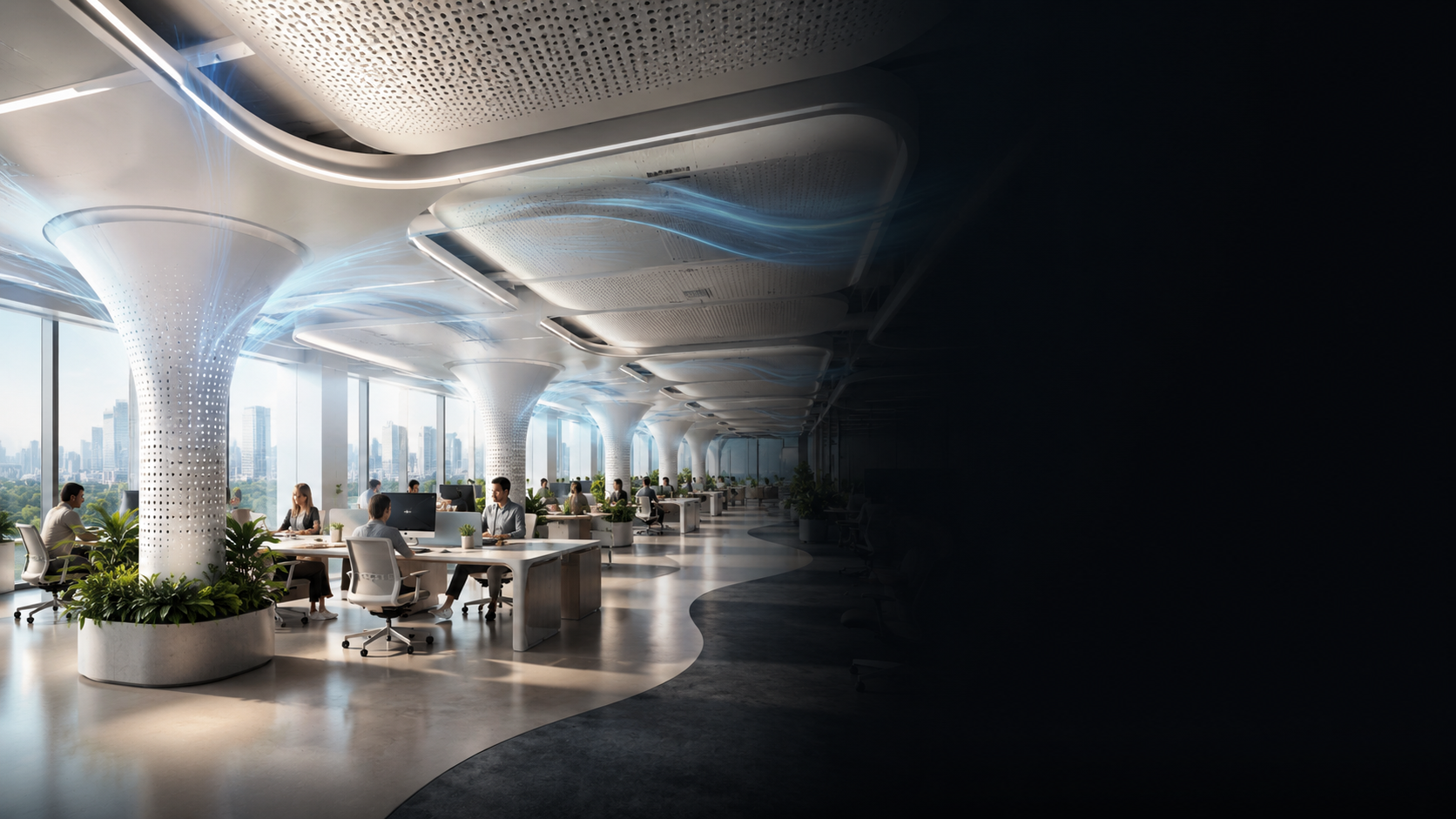
From Air Intelligence to PASSAIR® AI design
PASSAIR® uses Air Intelligence to create bespoke passive air movement solutions.
The real space
Every room moves air differently.
Indoor air physics, designed
PASSAIR® does not just design for airflow. It designs for indoor air physics.
Surface Attachment
Using form to guide air along surfaces.
Stack Effect
Using temperature difference to support vertical movement.
Venturi Acceleration
Using constriction to increase local air speed.
Boundary-Layer Interaction
Working with the air closest to walls, floors and objects.
Thermal Flow
Using warm and cool surfaces to influence movement.
Humidity Behaviour
Guiding moisture-laden air towards control zones.
Six physical principles. One passive architecture. PASSAIR® shapes form around the way air actually behaves indoors.
A new generation of Air-Aware products
PASSAIR® applies passive air movement design across products, interiors and architectural forms.
Air Intelligence becomes
spatial recommendation.
A first look at how Air Intelligence becomes passive air movement strategy. A preview of the PASSAIR® design layer, using room data to identify passive air movement opportunities and generate Air-Aware design recommendations.
Early platform preview · Design dashboard concept · Not a released product
- Room geometry
- Openings
- Occupancy zones
- Glazing
- Heat sources
- Existing airflow points
- Flow direction0.42
- Stagnant zones0.49
- Thermal gradients0.56
- Humidity movement0.63
- Boundary-layer activity0.70
- Acoustic airflow featureselected
- Vent-shaping formqueued
- Low-level passive pathqueued
- Wall-adjacent profilequeued
- Air-Aware product opportunityqueued
- Analysis in progress
- Recommendations generated
- Concept geometry ready
- Fabrication pathway pending
A new platform for acoustic design
For architects, designers
and manufacturers.
If your building, product or interior changes the shape of a room, it may also change how air moves. PASSAIR® helps design that effect intentionally.
AtmosField® creates Air Intelligence.
PASSAIR® turns it into intelligent passive design.
AtmosField® maps how air behaves. PASSAIR® uses that intelligence to generate passive airflow architecture, from products and interiors to fabrication-ready forms.
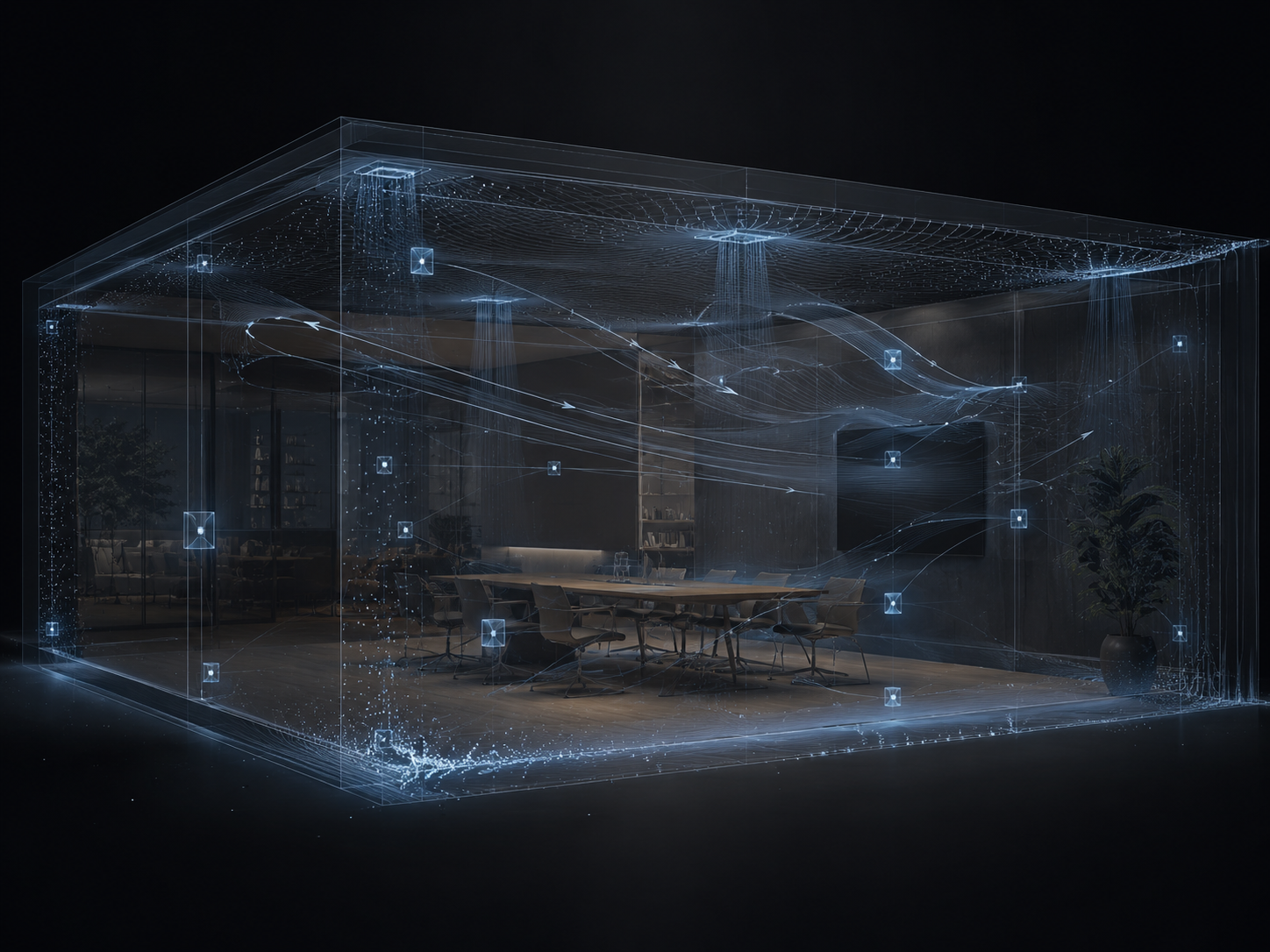
AtmosField® Intelligence
Air behaviour is mapped, modelled and understood.
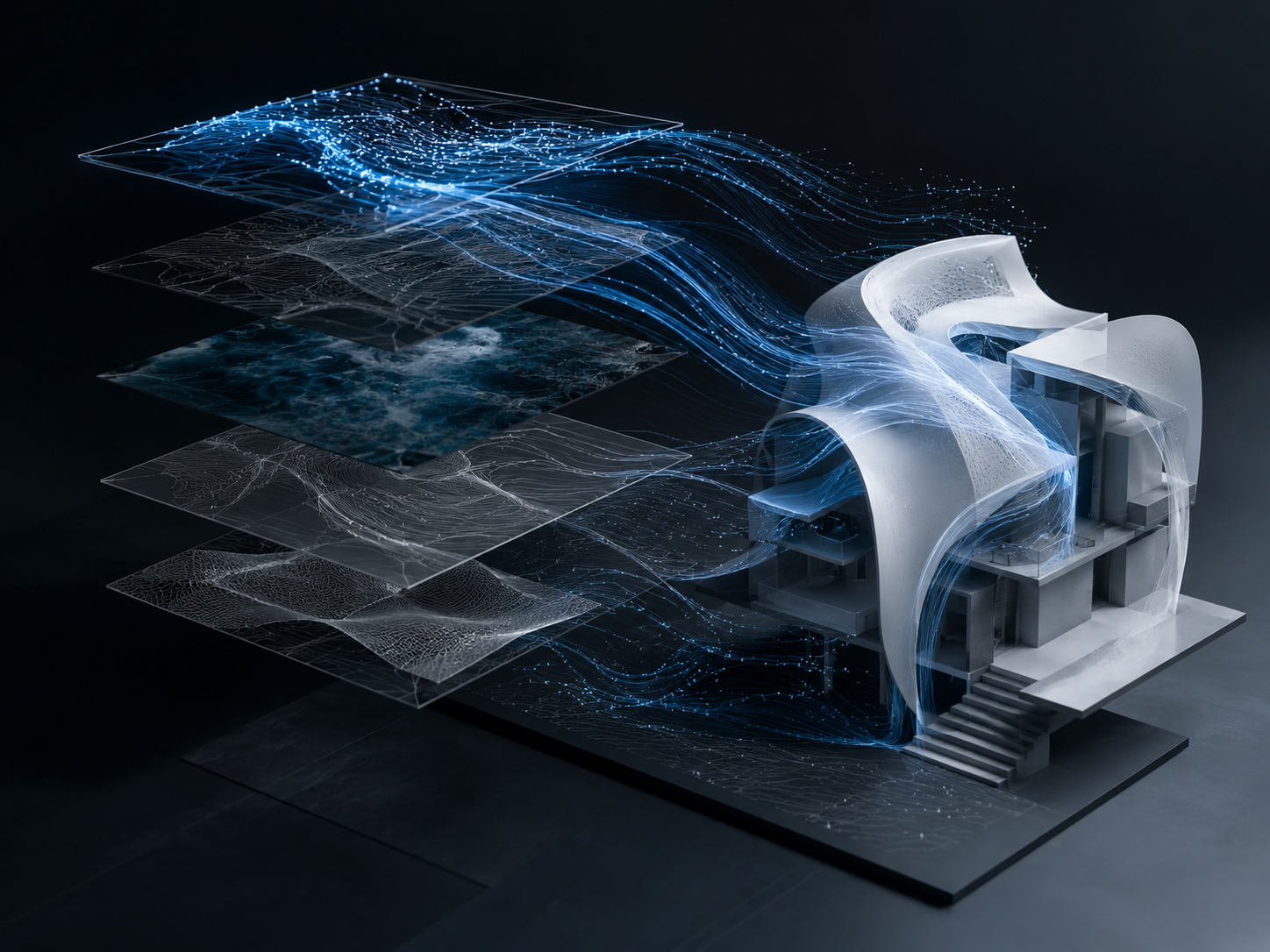
PASSAIR® Design Engine
AI turns air behaviour into passive airflow geometry.
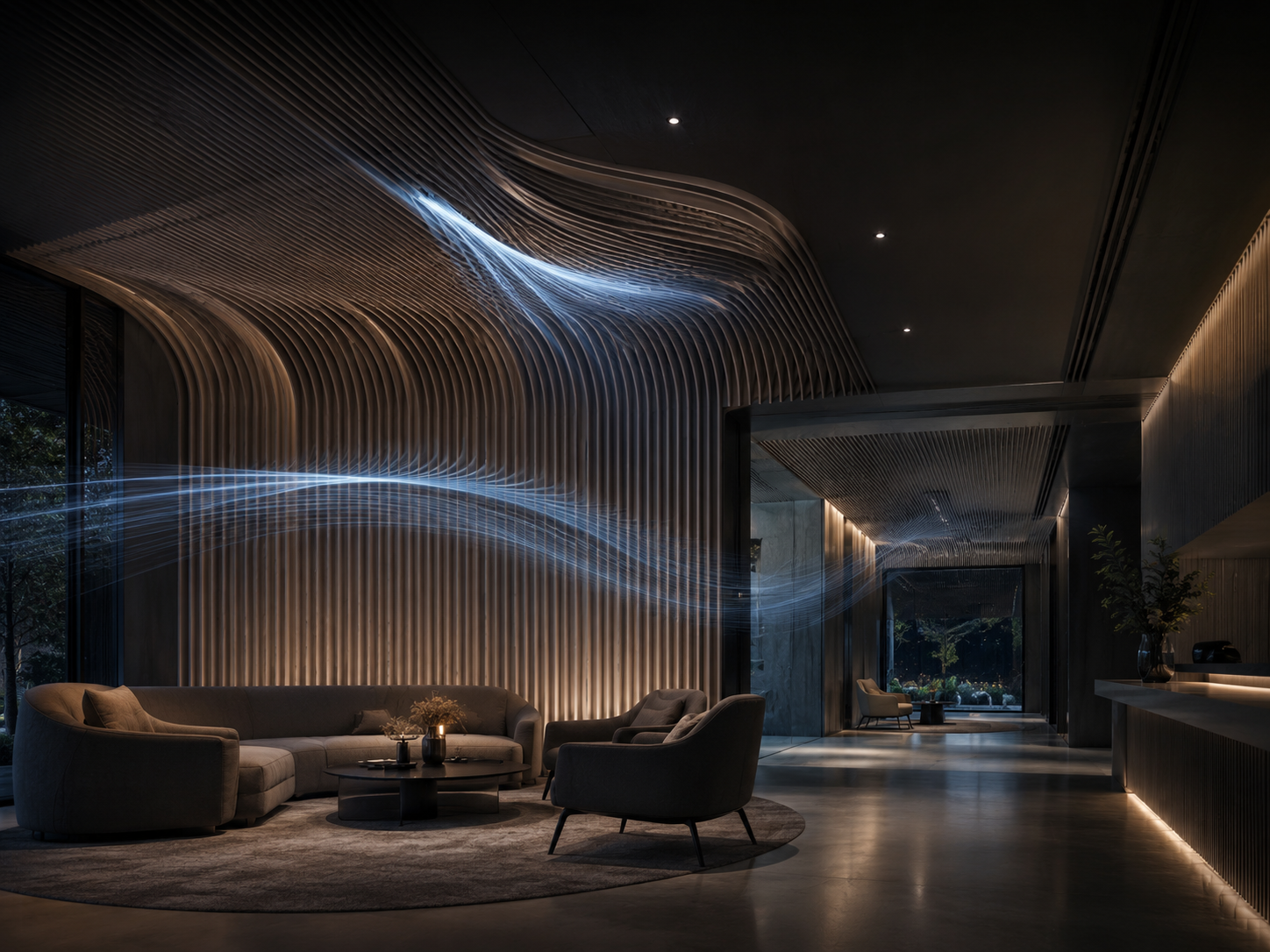
Air-Aware Architecture
Bespoke forms are built into products, interiors and spaces.
Air Intelligence powers
our AI design platform.
Creating passive airflow designs that improve indoor environmental quality. The future of better indoor environments is led by intelligent design.